
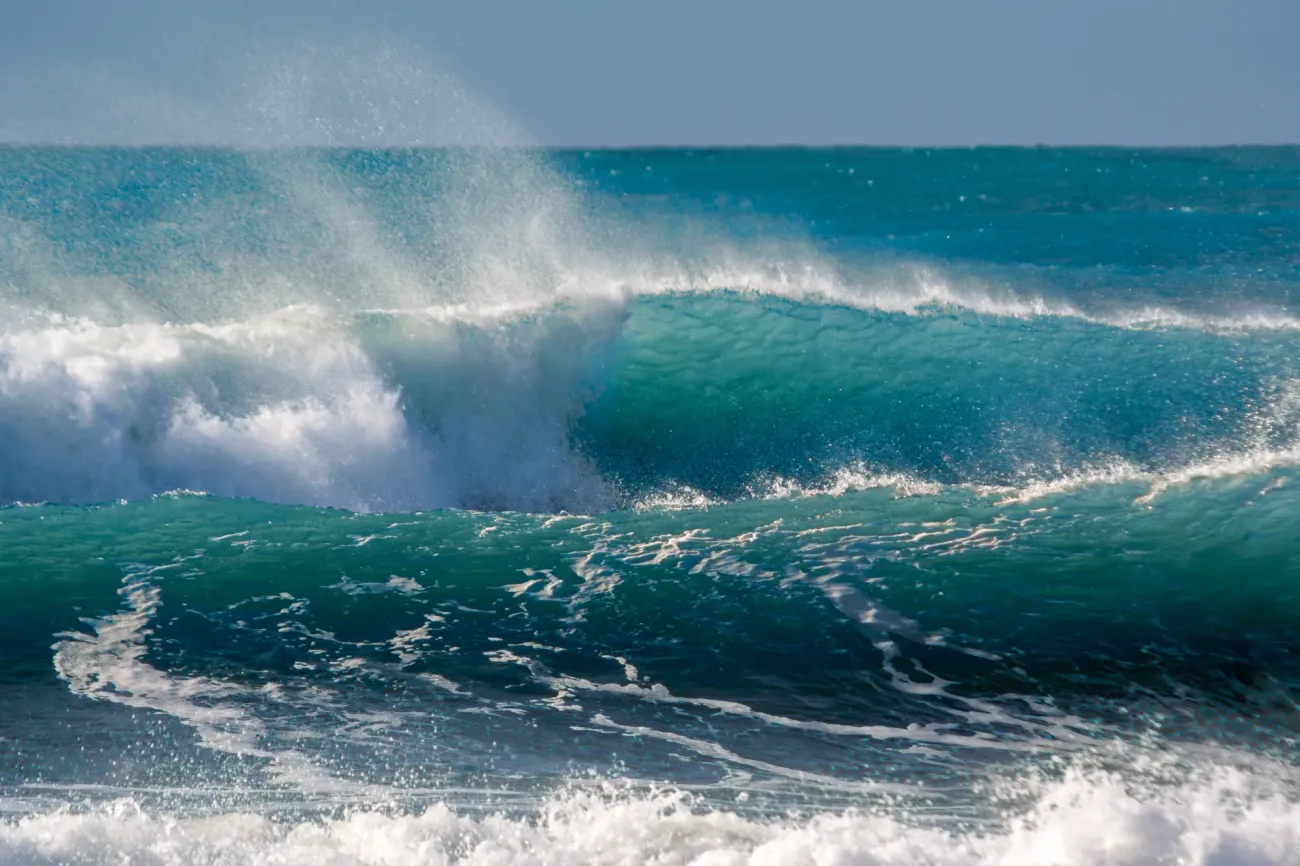
Photo: Giuseppe Lupinacci
“Tell me about the Ocean.”
“The Ocean cannot be told.”
This paradox framed the enquiry developed in the article “Salt lingers in the blood. A geographical dialogue on the Oceanic Sense of Place”, recently published in the academic journal J-READING. The contribution explored the possibility of defining an Oceanic Sense of Place, situating the discussion at the intersection of critical ocean studies and geographical debates on place-making.
Aligned with the vision of PartArt4OW, the article moved beyond land-centred notions of place, investigating how place at sea emerges through lived experience, relational practices and embodied engagements, rather than through fixed spatial anchors.
🌊 Rethinking Place at Sea
The paper examined how the experiences of seagoing people contributed to the emergence of an Oceanic Sense of Place grounded in emotionally felt and collectively elaborated attachments to the sea. These attachments were articulated through oceanic imaginaries, narratives, symbols, specialised jargons and systems of life developed within maritime practice.
Central to the argument was the recognition of kinship relations between human and more-than-human oceanic communities, positioning the ocean not as a passive backdrop but as an active participant in place-making. In this perspective, the sea became a relational space shaped by affects, technologies, movement and shared practices.
🧭 A Dialogical and Embodied Methodology
Methodologically, the article unfolded as a dialogue—an imagined navigation into human relationships with the Ocean. Drawing on reflective, qualitative, embodied and embedded research practices, it developed an auto-ethnographic and theory-informed exploration of place-making in the high seas.
Inspired by Dr. Donna Haraway’s call for “stories (and theories) that are able to gather the complexities and keep the edges open”, the paper resisted closure. Instead, it embraced uncertainty, relationality and partial perspectives as essential components of oceanic knowledge.
🌐 Key Questions Raised
Through the exploration of entanglements between bodies, technologies, affects and oceanic materialities, the article raised a series of interrelated questions:
- Can the sea be considered a home?
- How does an oceanic sense of place differ from land-based experiences of belonging?
- Which technological translations and sensorial engagements render parts of the ocean recognisable and meaningful?
- How can a fluid, transient and temporally grounded sense of place challenge exclusionary practices tied to belonging, ownership and the appropriation of common spaces?
By foregrounding movement, temporality and relationality, the paper proposed the Oceanic Sense of Place as a critical lens through which to rethink dominant, land-centred understandings of place, belonging and spatial justice.
🌍 Relevance for PartArt4OW
This contribution resonated strongly with the mission of PartArt4OW: to build emotional, cultural and civic connections between people and oceans through participatory, interdisciplinary and creative approaches. By challenging static notions of place and ownership, the article offered conceptual tools that can inform Participatory Art Initiatives, community-based research and new forms of ocean citizenship.
The full article is available in J-READING (Journal of Research and Didactics in Geography), and represents an important theoretical reference for ongoing and future PartArt4OW activities at the intersection of art, science and society.