
By the Plate of Memories Project Team
Can you still remember a time when species like picarel (Spicara flexuosa) or pandora were regular guests on the family dinner table?
In the coastal town of Izola, Slovenia, the answer is a resounding yes. However, today’s market demands and seasonal tourism across the Northern Adriatic have created an unsustainable trend: a high reliance on a handful of commercial species—such as sea bass and gilt-head bream—while perfectly delicious, nutritious, and abundant secondary catches are overlooked, undervalued, or thrown back dead or injured as unwanted discard.
This systemic imbalance threatens marine biodiversity and erodes centuries-old culinary heritage. But what if the key to shifting consumer habits and building a fairer, circular blue economy lies in bridging the gap between historical memory and cutting-edge marine science?
This is precisely the core mission of Plate of Memories, a Participatory Art Initiative (PAI) supported by the European Union through the Horizon Europe Mission Ocean programme (PartArt4OW).
Setting Sail: An Intergenerational Expedition on the Adriatic
On a sunny morning in mid-July, an unusual crew set sail from Izola: local fisherman Christian Pugliese, marine biologists from the National Institute of Biology – Marine Biology Station Piran (MBP Piran), and a group of local seniors from the Izola Intergenerational Center who remember the town’s fishing past firsthand.
"In my younger years, I often went fishing with my father, and later with my husband. But that was for our home, so we could grill the fish ourselves. Most of the time, it was picarel and pandora. It was always prepared at home, especially on Sundays—it was truly fresh, beautiful, and good fish," recalls Bruna Horvat, one of the senior participants. When asked whether smaller or less popular fish were returned to the sea back then, her answer was immediate: "No. That was eaten. Whatever you caught, you ate."
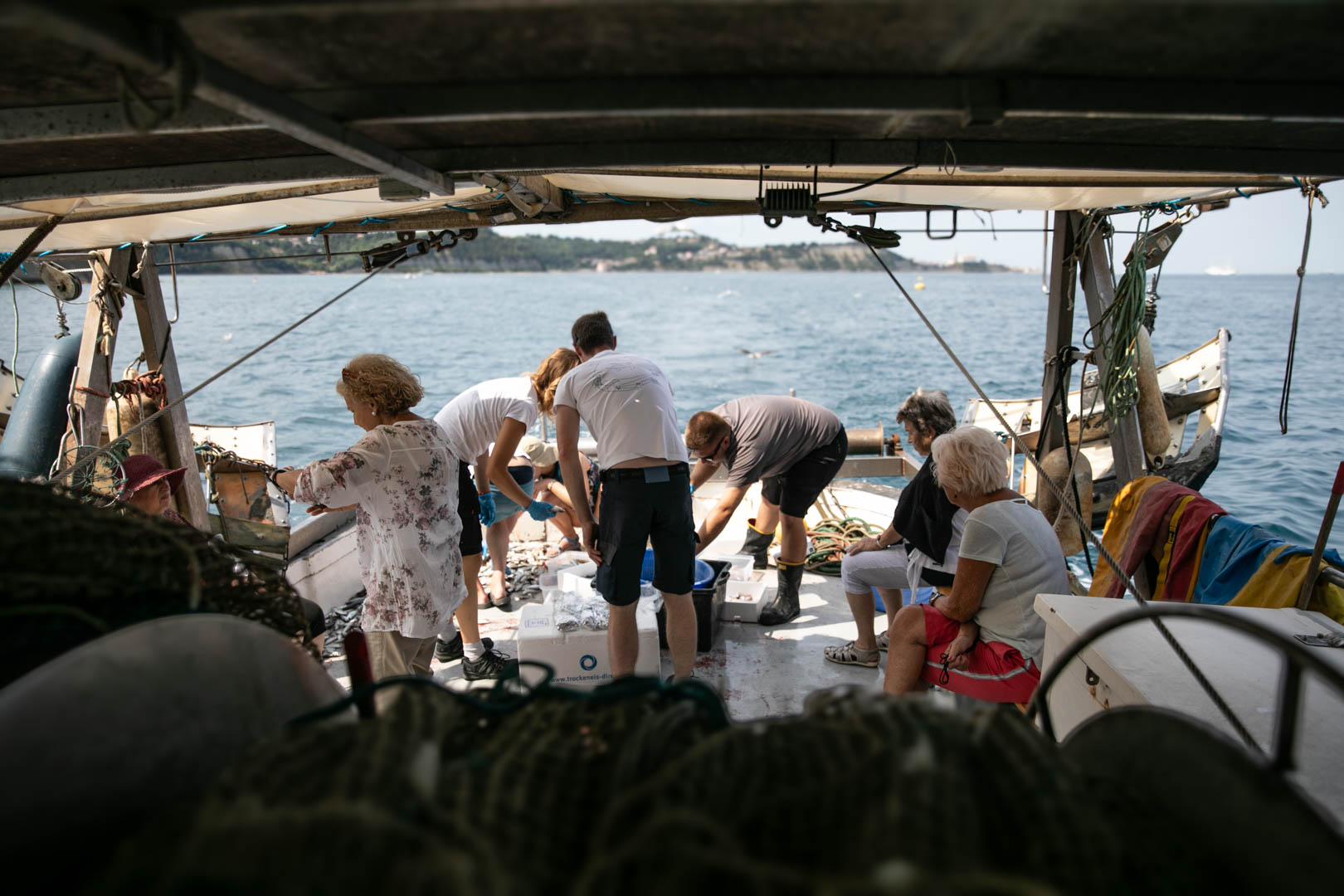
Intergenerational collaboration at sea: Seniors from Izola alongside marine scientists and fisherman Christian Pugliese aboard the vessel.
What Lies in the Net?
During a demonstration of bottom-trawl harvesting (koča), the crew logged a remarkably diverse snapshot of the Gulf of Trieste’s ecosystem.
Among the cartilaginous fishes were the bull ray (Aetomylaeus bovinus) and smooth-hound shark (Mustelus mustelus). Bony fishes dominated the catch—including picarel, pandora, scaldfish, red mullet, Mediterranean horse mackerel, bogue, salema, pilchard, comber, black goby, gurnards, and red bandfish. Cephalopods were represented by the European squid and musky octopus. All live undersized and juvenile specimens were carefully logged by scientists and immediately returned to the sea.
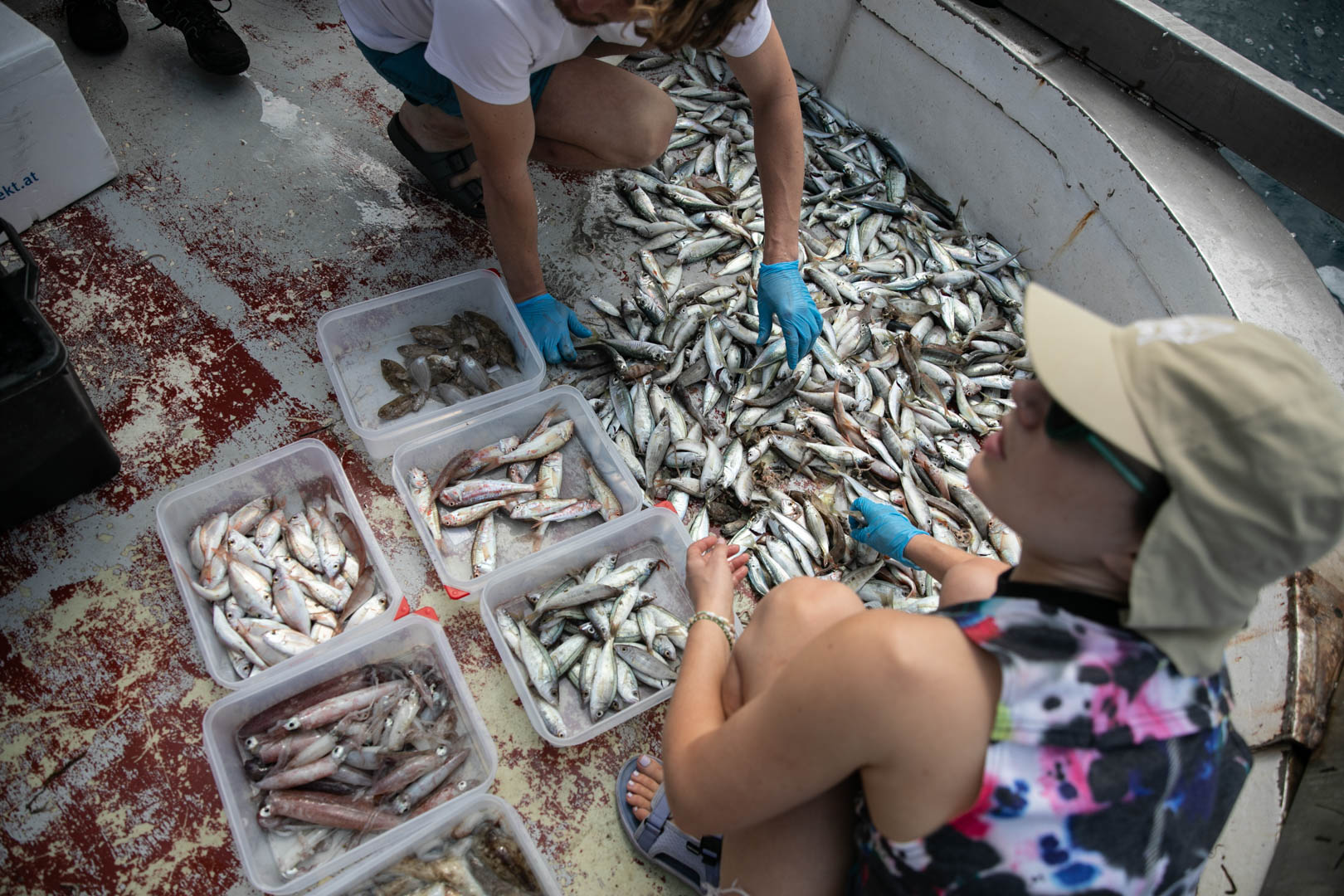
Scientific census in action: Marine biologists logging species diversity directly on board to understand actual sea yields versus market demand.
While the biodiversity of the catch is rich, marine biologist Dr. Domen Trkov (MBP Piran) notes the critical ecological issue:
"Even though most caught species are commercially relevant, a significant portion consists of smaller specimens or lower-value species, leading fishermen to discard them. This discard represents a major challenge for sustainable fisheries, as many organisms do not survive the physical stress of capture. Encouraging the consumption of lesser-known species can significantly contribute to a more comprehensive use of the catch, reduce discards, and lower the pressure on over-harvested commercial fish stocks."
From Bycatch to Plate: What’s Next for Plate of Memories?
Plate of Memories translates these complex ecological challenges into tangible, everyday experiences by merging marine biology, community storytelling, zero-waste gastronomy, and bio-art:
- Oral Histories & Performing Arts: Collaborating with senior participants to transform their memories and field insights into immersive performance stories.
- Zero-Waste Culinary Innovation: Under the guidance of an expert chef, gastronomy students at the High School Izola are creating a 4-course zero-waste menu using these neglected species, preparing future chefs to embrace sustainable whole-catch utilization.
- Bio-Material Artistry: In September, the HEKA Art&Science Lab will launch an open call for the public to design serving plates crafted from marine biomaterials, featuring artistic engravings inspired by these overlooked fish.
The pilot project will culminate in a public performative dinner, where guests will taste the zero-waste dishes served on marine biomaterial plates and sign the "Blue Badge Manifesto"—pledging to look beyond a few mainstream species when choosing seafood.
By empowering citizens to act as conscious consumers, Plate of Memories proves that changing market demand starts on our plates—one memory and one overlooked fish at a time.
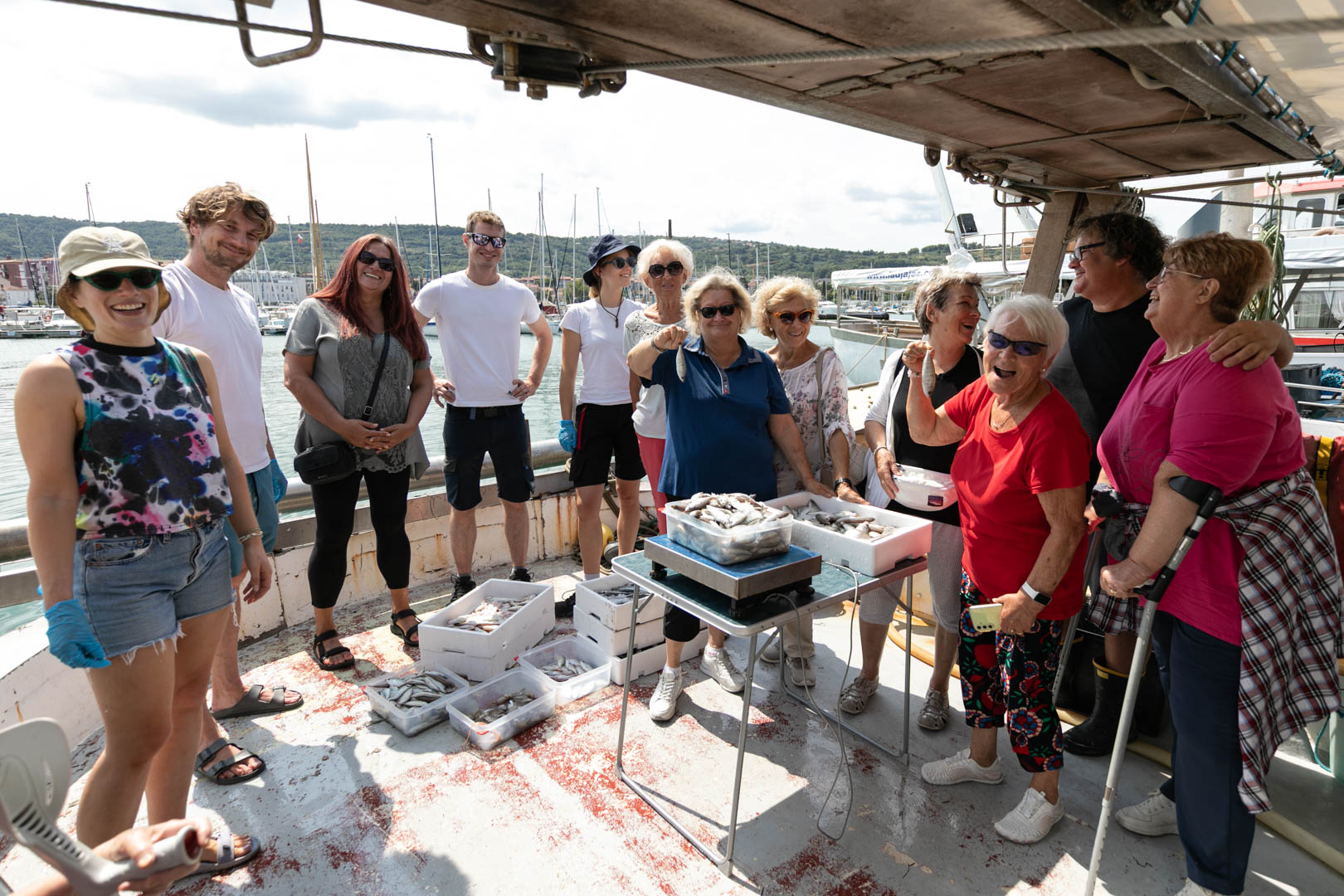
Preserving local heritage and protecting marine ecosystems: Connecting living memories with ocean literacy.
PartArt4OW has received funding from the European Union Horizon Europe Mission Ocean Programme HORIZON-MISS-2023-OCEAN-01 under Grant Agreement No 101058677. UK participant in Horizon Europe Project PartArt4OW, Raw-News Visual LTD, is supported by UKRI grant number 10136713.